Exploring Amazon Redshift Use Cases with MOST Programming
Amazon Redshift is a fully managed, cloud-based data warehousing service provided by Amazon Web Services (AWS). It is designed to handle large-scale data analytics and business intelligence workloads, enabling organizations to store, analyze, and visualize vast amounts of data efficiently. 
What is AWS Redshift?
Amazon Redshift is a petabyte-scale data warehouse service that allows users to analyze data using SQL and integrate it with various business intelligence (BI) tools. It is built on a columnar storage architecture, which optimizes performance for analytical queries by reducing the amount of data read during queries. Redshift is fully managed, meaning AWS handles infrastructure provisioning, maintenance, and scaling, allowing users to focus on data analysis.
Key Features of AWS Redshift
Columnar Storage: Redshift stores data in columns rather than rows, which improves query performance and reduces I/O operations for analytical workloads.
Massively Parallel Processing (MPP): Redshift distributes data and queries across multiple nodes, enabling fast query execution even for large datasets.
Scalability: Redshift allows users to scale their data warehouse up or down by adding or removing nodes, ensuring optimal performance and cost-efficiency.
Integration with BI Tools: Redshift integrates seamlessly with popular BI tools like Tableau, Power BI, and Looker, enabling users to visualize and analyze data easily.
Data Encryption: Redshift provides encryption for data at rest and in transit, ensuring data security and compliance with industry standards.
Automated Backups: Redshift automatically backs up data to Amazon S3, providing durability and disaster recovery.
Cost-Effective: Redshift offers a pay-as-you-go pricing model, allowing organizations to pay only for the resources they use.
Machine Learning Integration: Redshift integrates with Amazon SageMaker, enabling users to build, train, and deploy machine learning models directly on their data.
Architecture of AWS Redshift
Amazon Redshift is built on a cluster-based architecture, which consists of the following components:
Leader Node: Manages query planning, coordination, and communication with client applications. It distributes queries to compute nodes and aggregates results.
Compute Nodes: Execute queries in parallel and store data. Each compute node is divided into slices, which process a portion of the data.
Node Types: Redshift offers two types of nodes:
Dense Compute (DC): Optimized for performance and suitable for large datasets.
Dense Storage (DS): Optimized for cost-efficiency and suitable for very large datasets.
Columnar Storage: Data is stored in columns, which reduces the amount of data read during queries and improves performance.
Data Distribution Styles: Redshift supports three data distribution styles to optimize query performance:
EVEN: Data is distributed evenly across all nodes.
KEY: Data is distributed based on a specific column, ensuring related data is stored together.
ALL: A copy of the entire dataset is stored on each node, useful for small tables.
Advantages of AWS Redshift
High Performance: Redshift’s columnar storage and MPP architecture enable fast query execution, even for large datasets.
Fully Managed: AWS handles infrastructure management, including provisioning, scaling, and maintenance, reducing operational overhead.
Scalability: Redshift allows users to scale their data warehouse by adding or removing nodes, ensuring optimal performance and cost-efficiency.
Cost-Effective: Redshift’s pay-as-you-go pricing model and ability to pause/resume clusters help organizations save costs.
Integration with AWS Ecosystem: Redshift integrates seamlessly with other AWS services like S3, Glue, Lambda, and SageMaker, enabling end-to-end data solutions.
Security: Redshift provides robust security features, including encryption, IAM roles, and VPC integration.
Common Use Cases for AWS Redshift
Data Warehousing: Redshift is ideal for building centralized data warehouses that consolidate data from multiple sources for analysis.
Business Intelligence: Redshift integrates with BI tools like Tableau and Power BI, enabling organizations to create dashboards and reports.
Log Analysis: Redshift can store and analyze large volumes of log data from applications, websites, and servers.
E-Commerce Analytics: Redshift helps e-commerce companies analyze customer behavior, sales trends, and inventory data.
Machine Learning: Redshift integrates with Amazon SageMaker, allowing organizations to build and deploy machine learning models on their data.
Data Lake Integration: Redshift can query data stored in Amazon S3, enabling organizations to combine data warehousing and data lake architectures.
Getting Started with AWS Redshift
To start using Amazon Redshift, follow these steps:
Create a Redshift Cluster: Use the AWS Management Console to create a Redshift cluster, specifying the node type, number of nodes, and other configurations.
Load Data: Use the COPY command to load data from Amazon S3, DynamoDB, or other sources into Redshift.
COPY sales FROM 's3://my-bucket/sales-data' CREDENTIALS 'aws_iam_role=arn:aws:iam::123456789012:role/MyRedshiftRole';
Query Data: Use SQL to query and analyze data in Redshift.
SELECT product_id, SUM(sales) FROM sales GROUP BY product_id;
Visualize Data: Connect Redshift to BI tools like Tableau or Power BI to create visualizations and dashboards.
Conclusion
Amazon Redshift is a powerful, fully managed data warehousing solution that enables organizations to analyze large volumes of data quickly and cost-effectively. Its columnar storage, MPP architecture, and seamless integration with the AWS ecosystem make it an excellent choice for modern data-driven organizations. Whether you’re building a data warehouse, analyzing logs, or integrating machine learning, Redshift provides the tools and scalability you need to unlock the full potential of your data.
By leveraging Redshift’s capabilities, organizations can gain valuable insights, improve decision-making, and drive business growth. Start exploring Amazon Redshift today and take your data analytics to the next level!
Amazon Redshift Use Cases: Complete Guide to Data Warehousing Applications
Introduction
Amazon Redshift use cases span the full spectrum of enterprise data warehousing needs, from real-time analytics powering split-second business decisions to petabyte-scale data consolidation across global organizations. This guide covers practical applications where AWS Redshift delivers measurable value, including industry-specific implementations and decision frameworks for data teams.
The scope here focuses on enterprise-scale use cases, industry applications, and implementation scenarios. Basic setup tutorials and detailed pricing breakdowns fall outside this guide. Data engineers, data architects, and business decision-makers evaluating Redshift for specific business needs will find actionable guidance for their planning processes.
Direct answer: Amazon Redshift excels at petabyte scale data warehouse workloads, real-time analytics on streaming data, business intelligence reporting with existing business intelligence tools, and multi-source data integration eliminating custom ETL pipelines.
By the end of this guide, you will understand:
- Optimal use cases where Redshift outperforms alternatives
- Industry-specific applications with real-world examples
- Implementation approaches for common scenarios
- Decision criteria for choosing Redshift over other cloud data warehouses
If you're evaluating Amazon Redshift for a new warehouse or modernization effort, contact MOST Programming to discuss requirements, architecture, and implementation options.
Understanding Amazon Redshift Core Capabilities
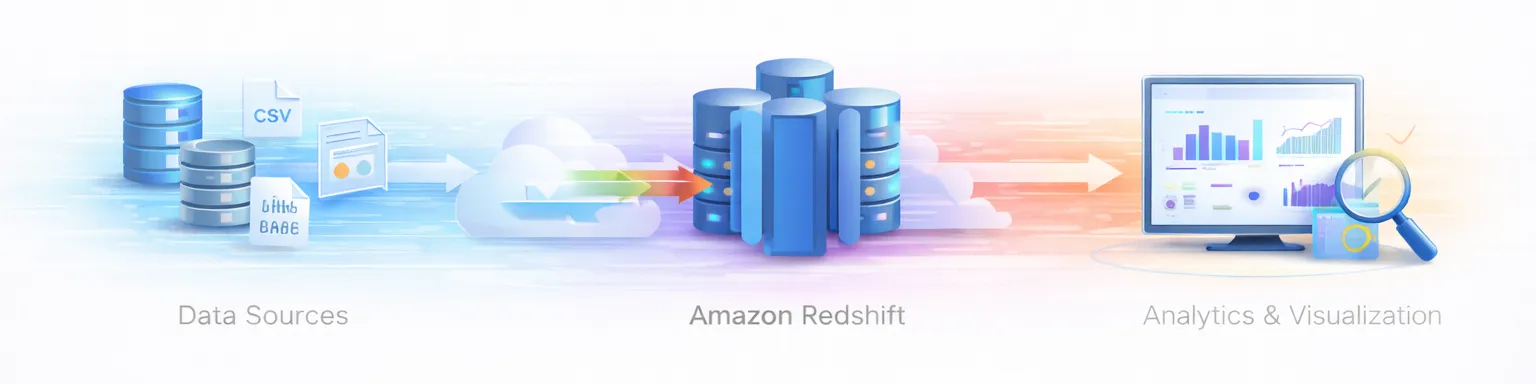
Amazon Redshift functions as a fully managed cloud data warehouse designed for high-performance analytics on large datasets. Its key features—such as relational format, data compression, performance improvements, and cloud-specific capabilities—distinguish Redshift from other solutions.
For enterprises needing to store data at scale while running complex queries against historical data, Redshift provides the infrastructure to analyze data without managing infrastructure such as provisioning, monitoring, and maintenance.
Amazon Redshift is a SQL database that supports standard SQL commands and is optimized for analytics and large-scale data queries.
Massively Parallel Processing (MPP) Architecture
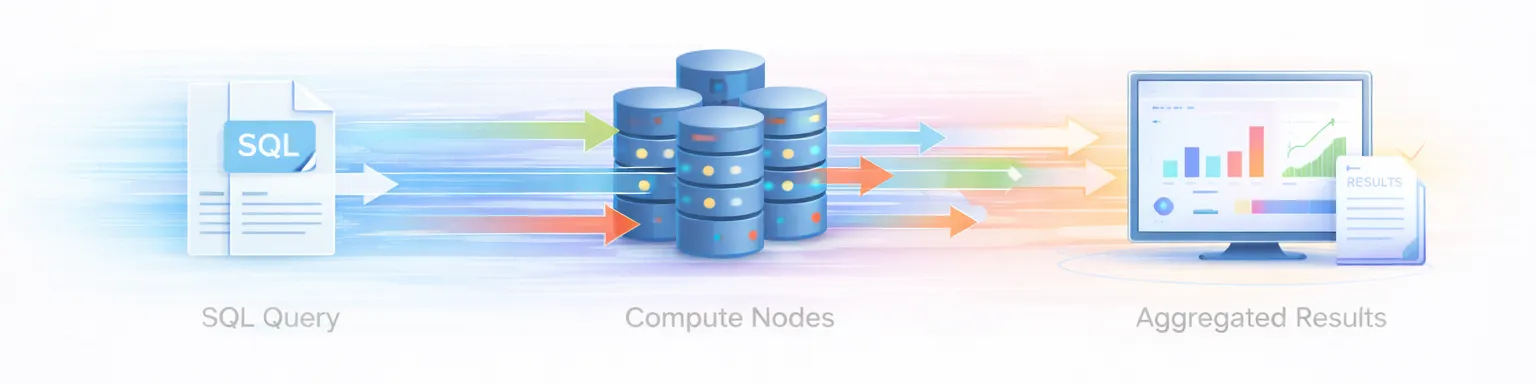
Massively parallel processing MPP distributes query execution across multiple nodes simultaneously. When you query data in Redshift, the system breaks down operations and assigns them to compute nodes that execute in parallel, dramatically reducing response times on large scale data operations.
This architecture directly enables use cases requiring fast query performance on petabyte scale data. Organizations processing billions of rows—such as analyzing customer purchase histories across regions—achieve sub-second responses because compute nodes execute portions of each query concurrently rather than sequentially.
Columnar Storage and Query Optimization
Redshift organizes data using a columnar storage format, which efficiently manages large datasets and supports fast query processing from various data sources.
Columnar storage organizes data by columns rather than rows, which proves ideal for online analytical processing workloads. When running SQL queries that aggregate or filter specific columns across millions of records, Redshift reads only the relevant columns rather than entire rows.
Unlike online transaction processing (OLTP) systems that are designed for fast, transactional operations such as inserts, updates, and deletes, Redshift is optimized for analytical workloads (OLAP) and large-scale data analysis rather than transactional tasks.
This approach delivers up to 4x data compression compared to row-based storage, reducing both data storage costs and I/O during query execution. For reporting scenarios where analysts repeatedly run complex queries against the same columns, columnar storage combined with distribution keys and sort keys optimizes performance substantially.
AWS Ecosystem Integration
Redshift seamlessly integrates with core AWS services including Amazon S3 for data staging, Amazon Kinesis for streaming ingestion, AWS Glue for ETL orchestration, and IAM for access control. This seamless integration within Amazon Web Services means data teams can load data from operational databases, data lake sources, and external systems without building custom connectors.
These integration capabilities set up the specific use cases covered next, where combining multiple data sources and processing streams becomes straightforward rather than requiring extensive data warehouse infrastructure engineering.
Need a Redshift architecture that integrates S3, Glue, and BI tools cleany? Contact us to map out a scalable, secure approach.
Primary Amazon Redshift Use Cases

Building on Redshift’s MPP architecture and AWS integration, four primary application categories emerge where this data warehousing solution delivers distinct advantages over alternatives.
Real-Time and Near Real-Time Analytics
Streaming data analysis for operational decision-making represents one of Redshift’s strongest applications. Through Kinesis integration, organizations ingest and analyze data as events occur, powering live dashboards and automated responses.
Uber exemplifies this use case, using Redshift for real time analytics on surge pricing, driver routing, and traffic predictions. The system processes streaming trip data alongside historical data, enabling thousands of minute-level computations worldwide. Gaming companies similarly leverage this capability for near real-time player metrics and ad impression analytics, monitoring engagement and revenue with latency measured in seconds rather than hours.
Financial trading platforms use this pattern for market sentiment analysis, combining real-time feeds with structured data from relational databases to generate trading signals.
If you need near real-time analytics pipelines on AWS, contact us to design ingestion, modeling, and dashboard performance for your workload.
Business Intelligence and Reporting
Enterprise reporting and self-service analytics drive widespread Redshift adoption. The data warehouse connects via JDBC/ODBC to business intelligence tools including Tableau, PowerBI, and Amazon QuickSight, enabling analysts to build interactive dashboards on petabyte-scale datasets.
Organizations running global sales tracking, KPI monitoring, or executive dashboards benefit from Redshift’s ability to handle high-concurrency workloads—up to 10x baseline capacity through concurrency scaling. Materialized views blend historical and real-time operational data, giving business users valuable insights without waiting for overnight batch processing.
For predictive analytics use cases, Redshift ML integrates XGBoost models directly into SQL, allowing data scientists to run regression and classification on data stored in the warehouse without moving it to separate ML platforms.
Want faster Power BI or Tableau performance on AWS data? Contact us to optimize Redshift for reporting, concurrency, and cost.
Data Consolidation and Multi-Source Integration
Modern enterprises struggle with data scattered across CRM systems, ERP platforms, web analytics tools, and external sources. Redshift addresses this through zero-ETL integrations announced in 2024 with enterprise applications including Salesforce, Zendesk, ServiceNow, SAP, Facebook Ads, and Zoho CRM.
These integrations automatically replicate transactional data into Redshift for cohort analysis, customer segmentation, and operational insights—eliminating the custom pipelines that traditionally required months of development. Organizations can combine structured data from SQL databases with semi-structured JSON from web applications and import data from partner APIs into a unified analytical environment.
Cross-account S3 access via IAM Identity Center simplifies data loading for organizations with thousands of users across business units, enabling federated data access with proper access management controls.
If your data is spread across systems and teams, contact us to consolidate sources and build a reliable analytics layer in Redshift.
Log Analysis and Behavioral Analytics
Log analysis suits Redshift’s strengths for aggregating petabytes of application, website, or infrastructure logs. Enterprises process structured data from AWS CloudTrail, application events, and web server logs to identify bottlenecks, anomalies, or security threats.
The typical pattern involves staging raw data in Amazon S3 before batch loading with COPY commands, achieving query performance that outperforms general-purpose tools for both volume and speed. Unlike ad-hoc query engines better suited for infrequent exploratory scans, Redshift clusters excel when organizations run recurring analytics on consistent log schemas.
User behavior tracking, clickstream analysis, and application performance monitoring all follow this pattern, transforming raw data into actionable operational intelligence.
These primary use cases provide the foundation for industry-specific applications where Redshift addresses specialized requirements.
Need scalable log analytics on AWS? Contact us to design a Redshift and S3 workflow that supports repeatable reporting and long-term growth.
Industry-Specific Use Cases and Advanced Applications

The core capabilities translate into distinct implementations across industries with unique regulatory, performance, and analytical requirements.
Financial Services Applications
Regulatory reporting and risk analysis demand both massive data volume handling and robust security features. Financial institutions deploy Redshift for fraud detection systems that analyze data patterns across millions of daily transactions, flagging anomalies in near real-time.
Anti-money laundering (AML) programs process years of historical data to identify suspicious patterns, while stress testing scenarios run complex queries against consolidated position data across asset classes. Data encryption at rest and in transit, combined with granular access control, satisfies compliance requirements that eliminate many alternative platforms from consideration.
Algorithmic trading analytics leverage Redshift’s parallel processing to backtest strategies against tick-level market data, while regulatory bodies receive automated reports generated from centralized sample data repositories.
E-commerce and Retail Analytics
Customer segmentation, inventory optimization, and price optimization drive retail Redshift implementations. Organizations manage data from point-of-sale systems, e-commerce platforms, loyalty programs, and supply chain partners within unified Redshift clusters.
Personalization engines query customer purchase histories and browsing behavior to power recommendation systems. Supply chain analytics combine demand forecasting with inventory position data to optimize replenishment. Seasonal demand forecasting models train on years of historical data, enabling merchandise planning months in advance.
The ability to upload data from diverse sources—including unstructured data from customer reviews and social media—enables 360-degree customer views previously impossible without extensive data warehouse infrastructure investments.
Healthcare and Life Sciences
Patient data analytics, clinical trial analysis, and population health management represent growing Redshift applications. Healthcare organizations consolidate electronic health records, claims data, and outcomes information for research and operational improvement.
Genomics research processes massive sequence datasets, while drug discovery programs analyze data from compound screening at scale. Population health initiatives combine clinical, demographic, and social determinant data to identify intervention opportunities.
These use cases demand particular attention to data sharing controls and audit capabilities, where Redshift’s enterprise cloud data warehouses features satisfy HIPAA and other healthcare-specific requirements.
Implementation Decision Framework
Selecting Redshift requires evaluating specific workload characteristics against alternatives:
| Criterion | Startup Scale | Mid-Market | Enterprise |
|---|---|---|---|
| Data Volume | GBs (consider Athena) | TBs (Redshift viable) | PBs (Redshift optimal) |
| Query Complexity | Simple (Athena sufficient) | Moderate (Redshift beneficial) | Complex joins/aggregations (Redshift required) |
| Concurrency | Low (<10 users) | Moderate (10-100) | High (100+ concurrent) |
| Query Frequency | Ad-hoc (Athena preferred) | Regular (Redshift suitable) | Continuous (Redshift with scaling) |
| Budget Model | Variable (serverless) | Predictable (provisioned) | Committed (reserved instances) |
Organizations with predictable workloads benefit from 1- or 3-year reserved instances yielding up to 75% discounts. Variable workloads suit Redshift Serverless with auto-pause during idle periods.
Redshift outperforms other cloud data warehouses like Snowflake by up to 7x on price-performance for high-concurrency dashboarding within AWS-centric environments. Snowflake offers advantages for multi-cloud requirements, while Azure Synapse suits Microsoft-centric organizations.
Not sure whether Redshift is the right fit versus Snowflake or Synapse? Contact us and we'll help you choose based on workload, cost, and ecosystem alignment.
These decision criteria connect directly to implementation challenges that determine success.
Data Security and Access Control
Amazon Redshift empowers you with robust security features that safeguard your data warehouse infrastructure at every layer. You can leverage powerful data encryption capabilities, protecting your sensitive information both at rest and in transit using AWS Key Management Service (KMS). This ensures that your valuable data stored in the cloud remains secure from unauthorized access, giving you the confidence to manage critical business information.
You gain complete control over access management through AWS Identity and Access Management (IAM), enabling you to define precise permissions for users and applications interacting with your Redshift clusters. With IAM roles at your disposal, you can enforce strict access policies that align with your security requirements, granting or restricting access to specific datasets and cluster resources as your business needs dictate. Redshift also enables you to integrate with Virtual Private Cloud (VPC), allowing you to isolate your data warehouse infrastructure and maintain tight control over network-level access between Redshift and your other AWS services.
These comprehensive security measures, combined with audit logging and compliance certifications, deliver enterprise-grade protection that enables you to confidently manage sensitive workloads while meeting regulatory requirements. By harnessing these robust security features, you can unlock the full potential of cloud data warehousing, achieving the scalability and flexibility your organization needs to stay competitive in today's data-driven landscape.
Data Governance and Data Quality
Effective data governance delivers strategic advantages for maintaining the integrity and reliability of your data stored in Amazon Redshift, helping you make informed, data-driven decisions with greater confidence. By establishing cutting-edge policies and procedures for data management, your organization can ensure that your data warehouse infrastructure consistently delivers high-quality data that drives real business results and addresses your analytical challenges.
Redshift enables your data teams to implement sophisticated data quality checks using SQL queries, allowing you to identify and correct errors, inconsistencies, or missing values within large datasets while staying ahead in an increasingly competitive data landscape. Your data validation and cleansing routines can be automated as part of the data loading process, ensuring that only accurate and complete data is ingested into your warehouse, saving valuable time and resources while improving operational efficiency. Ongoing monitoring of your data usage and access helps enforce compliance with organizational policies and regulatory standards, delivering tailored solutions that further support trustworthy data analysis and strategic decision-making.
By prioritizing data governance, your organization can harness the full potential of your data warehouse, enabling reliable business intelligence and analytics that drive measurable results while minimizing the risks associated with poor data quality and helping you stay competitive in today's data-driven business environment.
Data Lineage and Metadata Management
Mastering the origin and transformation of data delivers actionable insights for data scientists and analysts leveraging Amazon Redshift's cutting-edge capabilities. Data lineage provides strategic visibility into how information flows through your system—from initial ingestion to final query execution—enabling teams to harness the full potential of data assets and drive informed decision-making with greater confidence.
Redshift empowers organizations through its advanced system tables and views, delivering tailored solutions that provide detailed insights into data distribution, storage optimization, and query execution patterns. These metadata tools enable you to document data sources effectively, track transformations seamlessly, and monitor how data is accessed and utilized across your data warehouse environment. By implementing comprehensive metadata management, teams can ensure transparency, enhance data quality, and stay ahead in increasingly competitive compliance landscapes.
Leveraging data lineage and metadata management in Amazon Redshift delivers intelligent solutions that address real-world challenges, enabling organizations to make strategic decisions about data usage, optimize analytical workflows, and maintain unwavering trust in their data warehouse infrastructure.
Cluster Configuration and Management
Optimizing your Amazon Redshift environment for peak performance and scalability starts with strategic cluster configuration and intelligent ongoing management. By selecting the right node type and cluster size, you can achieve the perfect balance of cost-effectiveness, lightning-fast performance, and seamless scalability for your growing data warehouse infrastructure. Your Redshift clusters can be precisely tailored to your specific workloads through advanced storage, networking, and security configurations, including cutting-edge security groups and IAM roles that deliver controlled access and enterprise-grade protection.
You can streamline your Redshift cluster management through the powerful AWS Management Console, CLI, and SDKs, giving you unmatched flexibility for both automated and hands-on operations that fit your workflow. With automated snapshotting and robust backup features, you can rest assured that your valuable data stored in your cloud data warehouse is fully protected against loss and can be rapidly restored whenever you need it, keeping your business operations running smoothly.
By investing in smart cluster configuration and proactive management strategies, you can ensure your Redshift clusters consistently deliver high-performance analytics that drive results while maintaining the rock-solid security and reliability your enterprise cloud data warehouses demand. This approach enables you to stay ahead in today's data-driven landscape and unlock the full potential of your analytics infrastructure.
Maintenance and Upgrades
At our organization, we understand that maintaining the health and efficiency of your Amazon Redshift clusters represents an ongoing process that drives the reliability of your data warehouse infrastructure. Our expertise in regular maintenance tasks—including monitoring cluster health, vacuuming tables to reclaim storage, and analyzing tables for query optimization—ensures you sustain fast query performance and efficient data storage that delivers real results for your business.
We leverage Amazon Redshift's cutting-edge automated features to deliver tailored maintenance solutions, utilizing scheduled software updates, automatic snapshotting, and managed backups that align with your operational goals. When your business needs evolve, we help you harness Redshift's seamless upgrades to new node types and larger cluster sizes, enabling your cloud data warehouse to scale alongside your growing data volume and analytical demands without compromising performance.
Our commitment to staying current with maintenance and upgrade best practices ensures that your Redshift clusters remain secure, resilient, and capable of supporting large scale data warehousing workloads. By combining technical expertise with industry experience, we empower your organization to extract valuable insights from data with greater confidence, helping you stay ahead in an increasingly competitive landscape.
Common Implementation Challenges and Solutions
Successful Redshift deployments address predictable obstacles during implementation and ongoing operation.
Data Loading and ETL Pipeline Issues
Optimizing COPY commands dramatically affects data loading performance. Use compressed formats (Parquet, ORC) staged in Amazon S3 rather than row-by-row inserts. Configure manifest files for parallel loading across compute nodes, and schedule large batch loads during low-usage windows to avoid impacting query workloads.
For zero-ETL sources, configure appropriate sync frequencies balancing data freshness against compute costs. Transform data post-ingestion using ELT patterns rather than pre-loading transformations that add pipeline complexity.
Query Performance Optimization
Distribution keys and sort keys determine whether queries execute in seconds or minutes. Analyze your most frequent query patterns to select distribution strategies—KEY distribution for large fact tables joined to dimensions, ALL distribution for small lookup tables referenced frequently.
Workload management queues isolate critical dashboards from exploratory queries. Configure separate queues with memory allocation matching workload requirements, preventing a single complex query from starving production reports.
Scaling for Concurrent Users
Concurrency scaling automatically provisions additional cluster configuration when queue wait times exceed thresholds. Enable this feature for BI workloads where user counts spike during business hours or reporting periods.
For provisioned data warehouse deployments, right-size clusters based on actual concurrent query patterns rather than peak theoretical demand. Redshift supports clusters up to 128 nodes, scaling horizontally as data volume and user counts grow.
Cost Management for Variable Workloads
Pause/resume schedules eliminate costs during predictable idle periods—nights, weekends, or off-season months. Serverless workgroups automatically scale compute independently of data storage, ideal for non-24/7 analytical loads.
Monitor actual usage against provisioned capacity. Organizations frequently over-provision initially, paying for data warehouse capacity exceeding requirements. Regular right-sizing reviews reduce costs by 30-50% in many implementations.
These solutions position organizations for successful long-term Redshift operation.
Ready to put a Redshift use case into production? Contact MOST Programming to scope a pilot and define success metrics.
Conclusion and Next Steps
Amazon Redshift use cases center on four categories: real time analytics for operational decisions, business intelligence reporting at enterprise scale, multi-source data consolidation eliminating ETL pipelines, and industry-specific applications in finance, retail, and healthcare.
Immediate next steps:
- Assess your current data volume and growth trajectory—Redshift becomes optimal above 1TB with predictable analytical workloads
- Evaluate compatibility between your existing business intelligence tools and Redshift’s JDBC/ODBC connectivity
- Identify a specific use case for a pilot project, preferably one with measurable performance baselines from current systems
- Calculate total cost of ownership including reserved instance discounts against your workload patterns
For organizations with variable or unpredictable query volumes, explore Redshift Serverless as an alternative to provisioned clusters. Those needing to query data across S3 data lake sources alongside warehouse tables should evaluate federated queries through Redshift Spectrum.
FAQs Related To Amazon Redshift
What are Amazon Redshift use cases?
Amazon Redshift use cases include data warehousing, business intelligence, analytics, and reporting at scale. Companies use Redshift to centralize data from multiple sources for fast querying, ad-hoc insights, and integration with visualization tools like Power BI / Visualization.
How is Amazon Redshift used for data analytics?
Redshift is used for data analytics by storing structured and semi-structured data in a columnar format that enables fast analytics queries. It supports large-scale aggregations, joins across big datasets, and integration with analytics engines, making it a core component of effective Data Management for analyzing historical trends and generating business insights.
Can Amazon Redshift be used for real-time analytics?
While Amazon Redshift is primarily optimized for batch analytics, it can support near-real-time analytics when paired with streaming ingestion tools within modern Cloud Applications. This allows businesses to analyze incoming data quickly and act on insights with minimal delay.
What business problems can Amazon Redshift solve?
Amazon Redshift use cases help solve business problems such as siloed data, slow reporting, fragmented analytics, and inefficient query performance. It enables centralized data storage, scalable querying, and complex analytical workloads that drive faster decision-making, often facilitated by a skilled Team of data architects.
How do companies integrate Amazon Redshift with BI tools?
Companies integrate Amazon Redshift with business intelligence tools by using native connectors or SQL clients. Tools like Tableau, Looker, and Power BI / Visualization platforms can connect directly to Redshift clusters to run queries and visualize dashboards in real time.
Is Amazon Redshift suitable for large enterprises?
Yes. Amazon Redshift is suitable for large enterprises because it scales storage and compute independently, supports massive datasets (terabytes to petabytes), and offers advanced features needed for compliance and protection, similar to the standards applied in our Security (Case Study).
What makes Amazon Redshift different from other data warehouses?
What differentiates Amazon Redshift from other data warehouses is its tight integration with the broader Technology Stack, cost-efficient scaling, columnar storage for fast analytics, and support for standard SQL. Redshift also offers features like Redshift Spectrum to query data in Amazon S3 without moving it.
Can startups use Amazon Redshift?
Absolutely. Startups leverage Amazon Redshift use cases to centralize data from their applications and analytics pipelines, getting fast insights without maintaining complex infrastructure. With flexible pricing and the ability to start small and scale, Redshift is accessible for early-stage Cloud Applications needs.
What performance benefits do Amazon Redshift use cases provide?
Amazon Redshift use cases provide performance benefits such as parallel query processing, columnar storage optimization, result caching, and workload management. These features enable faster query response times even as data volume grows, ensuring your Data Management strategy remains efficient.
How does Amazon Redshift help with cross-functional analytics?
Amazon Redshift helps with cross-functional analytics by consolidating data from sales, marketing, operations, finance, and customer behavior into one platform. Teams can run consistent queries and share insights across departments with a unified data source, a strategy often seen in high-volume industries like our Restaurants (Case Study).
Additional Resources
- AWS Redshift best practices documentation for specific data warehouse service implementations
- Industry solution architecture guides for financial services, healthcare, and retail deployments
- AWS Pricing Calculator for data warehousing solution cost modeling based on cluster configuration options
- Redshift Advisor within the console for workload-specific optimization recommendations
If you want hands-on help with Redshift optimization, ELT patterns, or BI performance, contact us to discuss next steps.